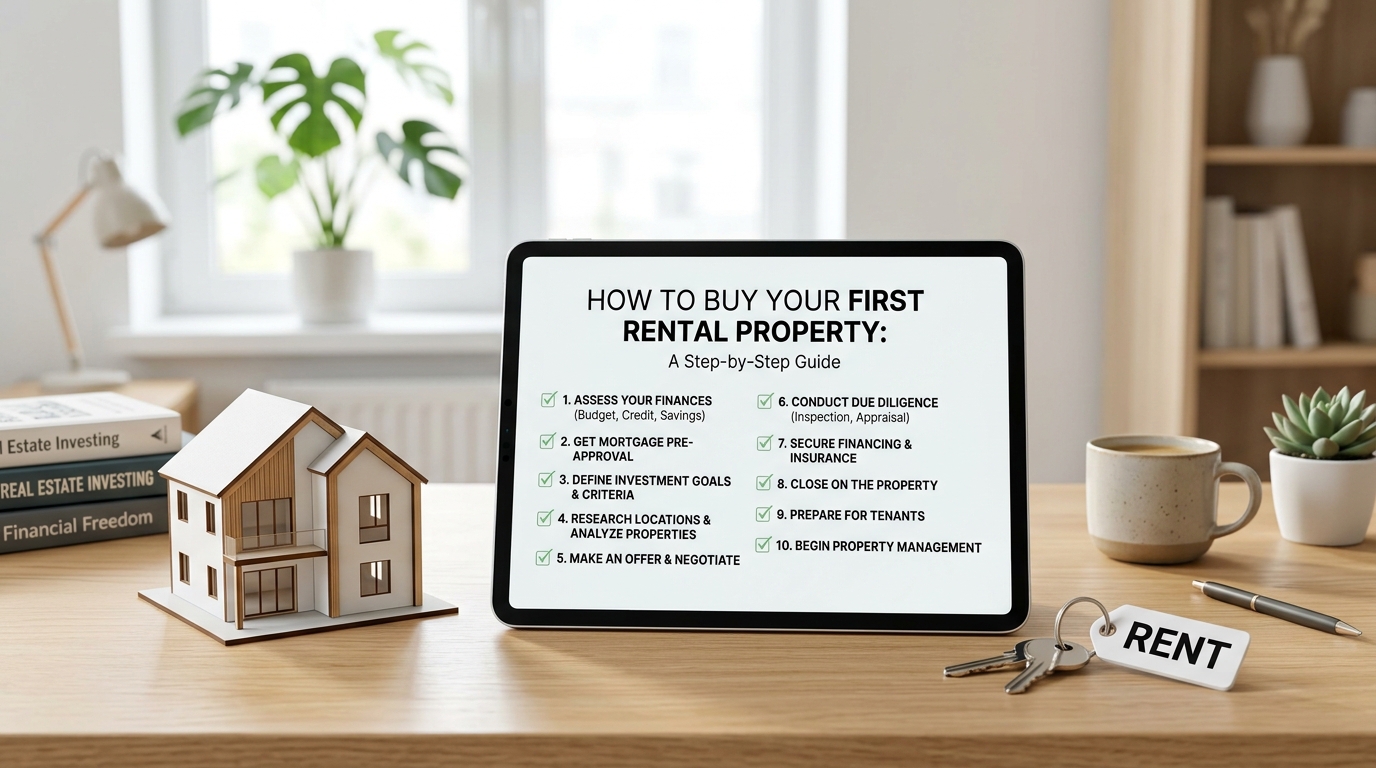
Dreaming of becoming a real estate investor but feeling stuck on where to start? You’re not alone. For many people, buying that first rental property seems like a huge, complicated leap—especially when you don’t have a trust fund or six-figure salary. But the truth is, you can do this. And you don’t need to wait years to start.
In this guide, I’ll walk you through exactly how to buy your first rental property in 2026, step by step. Whether you’re aiming for a small single-family home, a duplex, or even a condo, this roadmap will help you build your financial foundation, find the right market, analyze deals, and close on your first investment property in as little as 90 days.
Why Buy a Rental Property?
Before we dive into the steps, let’s talk about why buying a rental property is such a smart move:
-
Monthly Income: Rent from tenants can pay your mortgage and leave you with profit
-
Long-Term Growth: Property values tend to increase over time
-
Tax Benefits: You can deduct expenses like maintenance, insurance, and depreciation
-
Portfolio Diversification: Real estate is a stable asset that complements stocks and bonds
And the best part? You don’t need to be a millionaire to start. Many first-time investors begin with a single-family home or duplex using a conventional mortgage.
Step 1: Lay Your Financial Foundation
Before you even look at properties, you need to get your finances in order. Here’s what to do:
✅ Prepare Your Down Payment Funds
Most lenders require 15–25% down for investment properties. For a $200,000 home, that’s $30,000–$50,000.
-
Save in a high-yield account
-
Consider using bonus money, tax refunds, or gifts from family
-
Keep funds in the same bank for 2–3 months before applying (lenders want to see “seasoned” funds)
✅ Build Your Credit Score
Lenders will scrutinize your credit more closely for investment loans. Aim for:
-
Minimum: 640–680
-
Ideal: 720+ for better rates
Quick credit boosters:
-
Pay down credit card balances
-
Don’t open new credit lines before applying
-
Check for errors on your credit report
✅ Speak to Lenders Early
Get pre-approved before you start making offers. A pre-approval letter shows sellers you’re serious and gives you a clear budget.
What to ask lenders:
-
What interest rates do you offer for investment properties?
-
What’s the minimum credit score and down payment?
-
How long does approval take?
Step 2: Choose Your Investing Strategy
Not all rental properties are the same. Decide what type fits your goals, budget, and lifestyle.
Pro Tip: For your first rental, a single-family home or duplex is often the easiest start. They’re simple to manage and have broad tenant appeal.
Step 3: Pick Your Market
Where you buy matters more than most people realize. A great property in a bad market won’t perform well.
How to Choose the Right Market:
-
Job Growth: Areas with growing industries attract stable tenants
-
Rental Demand: Look for low vacancy rates and high rent-to-price ratios
-
Appreciation: Markets with rising home values
-
Taxes & Regulations: Some cities have strict rent controls or high property taxes
Quick Market Research Tips:
-
Use sites like Zillow, Rentometer, and BiggerPockets to compare rents and prices
-
Talk to local real estate agents who specialize in investment properties
-
Visit the area to check neighborhood conditions (schools, crime, amenities)
Personal Anecdote: My friend bought her first rental in a small town with 3% job growth and blanked it out of her budget. Two years later, she was earning $1,200/month in profit while her property value increased by 15%. The market made the deal.
Step 4: Start Analyzing Deals
Now comes the fun part: finding and evaluating potential properties. Don’t just look at the price—analyze the numbers.
Key Metrics to Calculate:
1. Cash Flow
-
Positive Cash Flow: You earn money each month
-
Negative Cash Flow: You’re paying from your pocket (common in high-appreciation markets)
2. Cap Rate
-
Good: 6–10%+
-
Below 5%: Usually not worth it unless you expect major appreciation
3. Cash-on-Cash Return
-
Good: 8–15%+
-
Shows how well your down payment is performing
Example Deal Analysis:
This deal looks strong! You’re earning $390/month profit with a 11.7% return on your cash.
Step 5: Build Your Investing Team
You don’t have to do this alone. A good team makes the process smoother and helps you avoid costly mistakes.
Who You Need:
Pro Tip: Look for agents who specialize in investment properties, not just residential homes. They’ll know how to spot good deals and understand your goals.
Step 6: Make Offers & Negotiate
Once you find a property that passes your analysis, it’s time to make an offer.
Negotiation Tips:
-
Start Lower: Offer 3–5% below listing if the market allows
-
Use Inspection Results: If issues come up, ask for a price reduction or repairs
-
Be Flexible: A quick closing or larger earnest money deposit (1–3%) shows you’re serious
-
Don’t Overpay: Stick to your max price based on the numbers, not emotion
Earnest Money Deposit (EMD):
-
Usually 1–3% of purchase price
-
Shows sellers you’re committed
-
Held in escrow until closing
Step 7: Complete Inspections & Finalize Mortgage
After your offer is accepted, you’ll enter escrow (typically 30 days). This is when final paperwork, inspections, and financing details are handled.
What to Do During Escrow:
-
Get a Home Inspection
-
Check for foundation problems, roof damage, plumbing issues
-
If major issues come up, negotiate a lower price or repairs
-
-
Finalize Your Mortgage
-
Submit additional docs to your lender: tax returns, W2s, bank statements
-
Keep your credit stable (don’t open new lines)
-
-
Get Landlord Insurance
-
Covers damages, liability, and loss of rental income
-
Required by most lenders
-
-
Prepare Your Property Manager
-
If you’re using one, make sure they’re ready to step in
-
If you’re self-managing, plan your tenant screening process
-
Step 8: Close & Celebrate!
At the end of escrow, you’ll:
-
Sign final paperwork
-
Make your down payment
-
Get the deed to your property
Congratulations—you’re officially a real estate investor! 🎉
Step 9: Get Your Property Rent-Ready
Before listing, make sure the property is tenant-ready:
-
Paint: Fresh neutral colors attract more tenants
-
Clean: Deep clean carpets, floors, bathrooms
-
Repair: Fix leaky faucets, broken doors, faulty lights
-
Safety: Test smoke detectors, lock doors, secure windows
-
Photos: Take high-quality photos for listings
If you’re working with a property manager, they’ll often handle this. If you’re self-managing, budget $1,000–$3,000 for prep costs.
Step 10: Find & Screen Tenants
Your first tenant is critical. A bad tenant can cost you thousands in damages and lost rent.
Tenant Screening Checklist:
-
Credit Score: Minimum 600–650
-
Income: 3x monthly rent
-
Rental History: No evictions, positive references
-
Employment: Stable job (6+ months)
-
Background Check: No criminal history
Use a screening service like TransUnion SmartMove or your property manager to handle this professionally.
Common Mistakes to Avoid
Even with a solid plan, beginners make these classic errors:
Final Thoughts: Your First Rental Is Within Reach
Buying your first rental property doesn’t require a huge salary or trust fund. With the right financial foundation, market research, deal analysis, and team, you can close on your first investment in as little as 90 days.