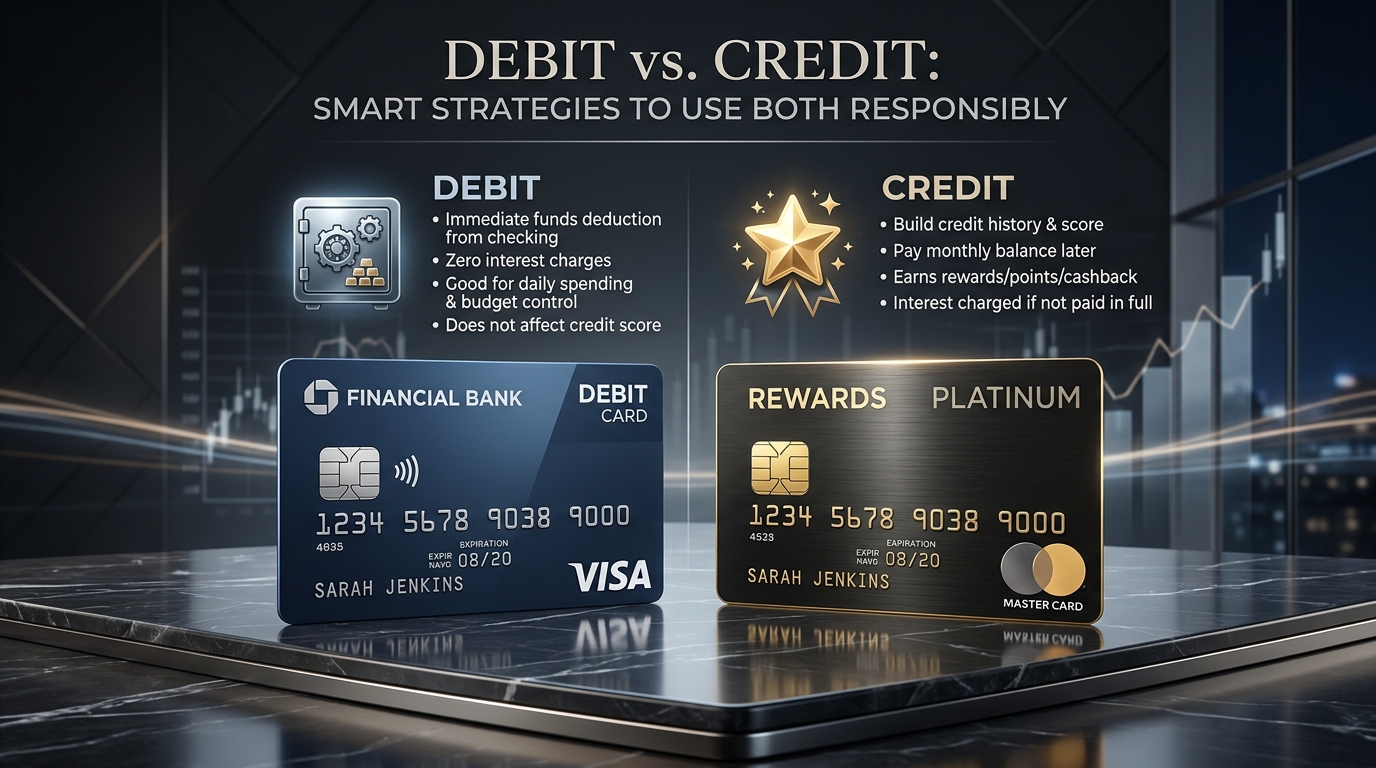
Are you confused about whether to swipe your debit card or credit card at the checkout? You’re not alone. Millions of people use both cards daily but struggle to know which one is better for each situation. The truth is, neither is perfect on its own—debit vs. credit each has unique pros and cons. But when you use them strategically, you can maximize benefits, protect your money, and build a smarter financial life.
In this guide, I’ll walk you through how to use debit and credit cards responsibly, when to choose one over the other, and smart strategies to avoid common pitfalls like interest, fees, and overspending. Whether you’re paying for groceries, booking travel, or building credit, you’ll know exactly which card to swipe.
What’s the Difference Between Debit and Credit?
Before diving into strategies, let’s clarify the basics:
Quick analogy:
-
Debit = Pulling cash from your wallet
-
Credit = Borrowing money from a friend and paying them back later
Pros and Cons at a Glance
Debit Card
Pros:
-
✅ No interest (you’re using your own money)
-
✅ Helps avoid overspending (limited by your balance)
-
✅ Great for budgeting and daily expenses
-
✅ No monthly fees (on most cards)
Cons:
-
❌ Less fraud protection (money is gone immediately)
-
❌ No credit building
-
❌ Risk of overdraft fees
-
❌ Limited rewards (usually 0–1%)
Credit Card
Pros:
-
✅ Excellent fraud protection (you don’t pay until resolved)
-
✅ Builds credit score (huge for loans, apartments, jobs)
-
✅ Earn rewards (cash back, points, travel)
-
✅ Purchase protections (warranty, insurance, price matching)
-
✅ Grace period (pay later without interest)
Cons:
-
❌ Interest if you don’t pay in full (can be 15–30%)
-
❌ Risk of overspending (easy to go over budget)
-
❌ Annual fees (on some premium cards)
-
❌ Credit score damage if you miss payments
Smart Strategy #1: Use Debit for Everyday Spending
For routine purchases like groceries, gas, and coffee, debit is your best friend. Here’s why:
Why Debit Works for Daily Expenses:
-
Budget Control: You can only spend what you have, preventing debt
-
No Interest: No risk of accruing charges
-
Easy Tracking: Your bank app shows real-time spending
-
Overdraft Awareness: You’ll see if you’re close to zero
Real-Life Example:
I use my debit card for everything under $100: groceries, dining, pharmacy. It keeps me honest with my budget. If I try to spend $120 but only have $80, the transaction gets declined—and I don’t end up in debt.
When to Use Debit:
✅ Groceries and household items
✅ Gas stations
✅ Coffee shops and casual dining
✅ Online shopping under $100
✅ ATM withdrawals (avoid credit cash advances)
Smart Strategy #2: Use Credit for Big Purchases & Travel
For bigger expenses like electronics, appliances, flights, or hotels, credit cards are the winner. Here’s why:
Why Credit Works for Big Purchases:
-
Fraud Protection: If your card is stolen, the lender covers it—not your bank account
-
Purchase Protections: Many cards offer extended warranty, damage coverage, or price protection
-
Rewards: Earn 2–5% cash back or travel points on big spends
-
Grace Period: Pay later without interest (if you pay in full)
Personal Anecdote:
Last year, I booked a $2,500 trip using my credit card. When the airline canceled my flight, I got a full refund within 2 weeks. If I had used debit, my money would’ve been gone for months while I waited. Plus, I earned 5,000 travel points worth $75.
When to Use Credit:
✅ Flights and hotels
✅ Major electronics (TVs, laptops)
✅ Appliances (washers, refrigerators)
✅ Car rentals
✅ Online subscriptions (many have fraud protection)
✅ Big-ticket purchases over $500
Smart Strategy #3: Build Credit Without Interest
One of the biggest mistakes people make is avoiding credit cards because they fear interest. But you can build credit without paying a penny if you follow these rules:
How to Use Credit Responsibly:
-
Set Up Auto-Pay: Pay the full statement balance automatically every month
-
Keep Spending Under 30% of Limit: Example: If your limit is $5,000, spend max $1,500/month
-
Pay On Time: Never miss a payment (even one day can hurt your score)
-
Use It Regularly: Make small purchases monthly to keep the account active
-
Avoid Carrying Balance: Don’t let interest accumulate
Pro Tip: Use your credit card for bills you already pay (like rent, utilities, or subscriptions) and set auto-pay. You’ll build credit effortlessly while earning rewards.
Example: Building Credit in 6 Months
Result: Your credit score increases by 120+ points in 6 months—without paying interest.
Smart Strategy #4: Avoid Overspending with Credit
Credit cards are powerful, but they can tempt you to spend more than you have. Here’s how to stay in control:
Rules to Prevent Overspending:
-
Treat Credit Like Debit: Only spend what you can pay off immediately
-
Set Spending Limits: Use your bank app to set a monthly cap (e.g., $1,000)
-
Track Weekly: Check your credit balance every week
-
No “Buy Now, Pay Later” Traps: Avoid services that encourage debt
-
Pay in Full Every Month: Never carry a balance
Real Talk:
My friend used to “max out” his credit card each month, thinking he’d pay later. He ended up with $8,000 in debt and 22% interest. It took 3 years to pay off. The lesson: credit is a tool, not free money.
Smart Strategy #5: Protect Yourself from Fraud
Fraud is a real risk—but you can minimize it by using the right card for the right situation.
Fraud Protection Comparison:
If You’re Frequented:
For Debit:
-
Call your bank immediately
-
Freeze your account
-
Request a new card
-
Monitor for 60 days
For Credit:
-
Call the lender
-
Dispute the charge (you don’t pay)
-
Get a new card
-
Fraud is usually resolved in 1–2 weeks
Key Difference: With debit, your money is gone immediately. With credit, you don’t pay until the issue is resolved.
Smart Strategy #6: Maximize Rewards Wisely
Credit cards offer rewards, but you need to use them strategically to avoid overspending.
Top Rewards Strategies:
-
Use High-Reward Cards for Specific Categories:
-
5% on groceries (e.g., Chase Freedom Flex)
-
3% on dining (e.g., Chase Freedom Unlimited)
-
2% on everything (e.g., Wells Fargo Active Cash)
-
-
Stack Rewards:
-
Use a credit card + rewards app (like PayPal)
-
Combine with store promotions
-
-
Don’t Chase Points:
-
Only spend what you need
-
Don’t buy stuff just to earn points
-
Example:
I use my 5% grocery card for all food shopping. For a $100 spend, I earn $5 back. If I used debit, I’d get $0. But I only spend what I budget anyway—so it’s free money.
Smart Strategy #7: Budget with Both Cards
Using debit and credit together can help you build a smarter budget.
The 2-Card Budget System:
How It Works:
-
Load your debit card with your monthly budget (e.g., $2,000)
-
Use credit for bills you already pay (rent, utilities, subscriptions)
-
Set auto-pay for credit to pay full balance monthly
-
Track both in your budget app
Result: You get the budget control of debit + the rewards and protection of credit.
Common Mistakes to Avoid
Even smart people make these mistakes. Let’s fix them:
When to Use Each Card: Quick Guide
Here’s a cheat sheet for everyday situations:
Final Thoughts: Both Cards Are Tools
The key takeaway is simple: debit and credit are both tools, and using them wisely makes you a smarter spender.
-
Debit = Budget control, no interest, great for daily expenses
-
Credit = Fraud protection, rewards, builds credit, great for big purchases
When you use debit for everyday spending and credit for big purchases and bills, you maximize benefits while minimizing risks. Plus, by paying your credit card in full every month, you build credit without paying interest.